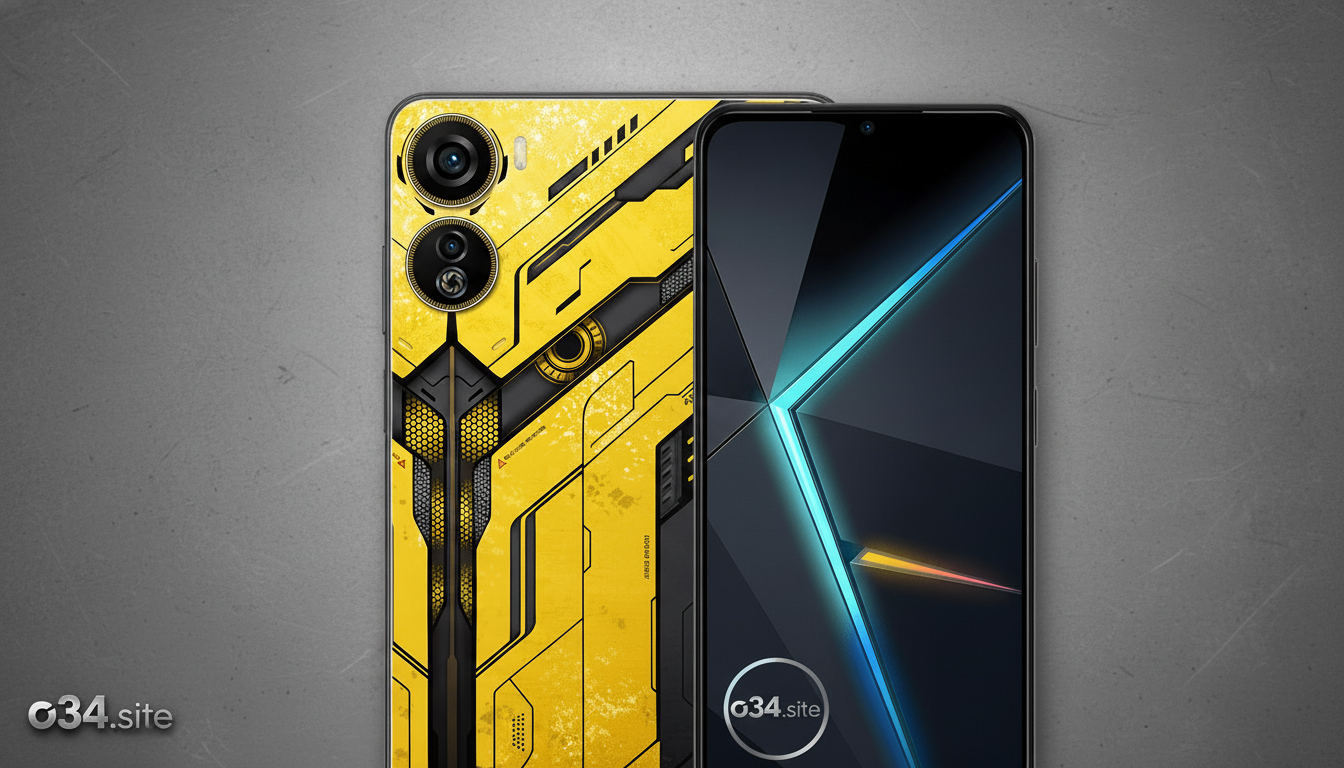
The world of affordable gaming smartphones is heating up fast — quite literally. Built-in cooling fans, once reserved for the most expensive and niche gaming devices on the market, are steadily making their way into more accessible price brackets. We witnessed this shift earlier in 2026 when the RedMagic 11 Air arrived with a Snapdragon 8 Elite processor, an internal fan, and a large 144Hz display — all for around €500.
Now at MWC 2026, ZTE’s gaming sub-brand nubia has gone one step further by unveiling the nubia Neo 5 GT — a fan-equipped gaming smartphone priced at just €400, making it the most affordable active-cooled gaming phone on the market right now. We spent time with the device on the show floor and have plenty to say. The good news is genuinely good. The concern, however, sits at the very heart of the device — and it is hard to overlook.
Here is your fully original, rewritten article in exact 34.site hands-on review + full specs format — ready to copy-paste directly into your site:
ZTE Nubia Neo 5 GT Review 2026 — Fan and RGB But Is the Chipset Enough?
March 19, 2026 by 34.site Team
The world of affordable gaming smartphones is heating up fast — quite literally. Built-in cooling fans, once reserved for the most expensive and niche gaming devices on the market, are steadily making their way into more accessible price brackets. We witnessed this shift earlier in 2026 when the RedMagic 11 Air arrived with a Snapdragon 8 Elite processor, an internal fan, and a large 144Hz display — all for around €500.
Now at MWC 2026, ZTE’s gaming sub-brand nubia has gone one step further by unveiling the nubia Neo 5 GT — a fan-equipped gaming smartphone priced at just €400, making it the most affordable active-cooled gaming phone on the market right now. We spent time with the device on the show floor and have plenty to say. The good news is genuinely good. The concern, however, sits at the very heart of the device — and it is hard to overlook.
Table of Contents
- First Impressions at MWC 2026
- The Cooling System — A Class First
- The Chipset — Where the Conversation Gets Difficult
- Display — Bright, Smooth and Genuinely Impressive
- Gaming Features — Triggers and Touch Response
- Battery and Charging
- Design, Build and IP Protection
- RGB Lighting and Aesthetics
- How Does It Compare to the RedMagic 11 Air?
- Full Specifications
- Pros & Cons
- Final Verdict
- FAQs About ZTE Nubia Neo 5 GT
First Impressions at MWC 2026
Picking up the nubia Neo 5 GT for the first time, the gaming identity of this device is immediately clear. It has the visual language of a proper gaming phone — aggressive styling on the rear panel, RGB elements that catch the light, physical trigger zones along the edges, and a satisfying flat profile that sits firmly on a table without the annoying wobble that plagues curved-back devices.
At €400, nubia is targeting a buyer who wants the full gaming phone experience — active cooling included — without stepping into premium flagship pricing. For that specific audience, the Neo 5 GT makes a genuinely strong first impression. The build quality in hand feels solid, the display lights up brilliantly, and the overall package communicates serious gaming intent from every angle.
Then you find out what chipset is inside — and the conversation changes.
The Cooling System — A Class First
The most headline-worthy feature of the nubia Neo 5 GT is its built-in internal cooling fan — and nubia deserves genuine credit for bringing this technology to the €400 price class. This is the first gaming smartphone at this price level to include active fan-based cooling, and the engineering behind it is more sophisticated than a simple fan attachment.
The internal fan works alongside a vapour chamber and a graphite heat spreader covering a combined surface area of 29,508mm² — a substantial thermal management system designed to pull heat away from the processor and battery consistently during heavy gaming sessions. The vapour chamber handles rapid heat transfer away from the chipset, the graphite layer distributes that heat across a wide area, and the fan then expels it from the device body.
In theory, this setup should allow the Dimensity 7400 processor to maintain more consistent clock speeds during sustained gaming loads — avoiding the thermal throttling that causes frame rate drops and performance inconsistency in passively cooled devices. Whether the real-world benefit justifies the price premium over a standard mid-range phone running the same chipset is a question that a full review will need to answer properly.
One engineering challenge nubia has handled thoughtfully is the ingress protection around the air duct. The main body of the device carries a full IP64 rating — dust-tight and resistant to water splashes from all directions. The air duct itself carries an IP5X rating — protected against dust ingress under most conditions, though not fully sealed since an open air path cannot be made completely airtight. For practical everyday use, the IPX4 splash resistance is the most relevant protection level — covering the accidental rain and drink spillage scenarios that most users will actually encounter.
The Chipset — Where the Conversation Gets Difficult
Here is the part of the nubia Neo 5 GT story that gave us pause during our MWC hands-on — and we think it is important to discuss honestly.
The nubia Neo 5 GT runs on the MediaTek Dimensity 7400 — a competent and energy-efficient 4nm mid-range chipset. It is a perfectly reasonable processor for a €250 to €300 smartphone. For a device positioned as a gaming phone at €400, however, it feels like a mismatch — and the presence of active cooling makes the choice even harder to rationalise.
Active cooling technology delivers the greatest benefit when it is paired with a processor that runs hot under load precisely because it is pushing hard. A flagship-class chipset like the Snapdragon 8 Elite generates significant heat during intense gaming because it is delivering serious performance. The Dimensity 7400 generates considerably less heat — not because of sophisticated thermal engineering, but because it is simply less powerful. The cooling system on the Neo 5 GT may therefore be solving a problem that the chipset barely creates.
The device we handled at MWC was equipped with 12GB of LPDDR5 RAM running at 6,400Mbps and 512GB of internal storage — which are genuinely strong memory specifications that help the overall package. But fast RAM paired with a mid-range processor still produces mid-range gaming performance.
The difficulty for nubia is the competitive context. For just €100 more than the Neo 5 GT, buyers can pick up the RedMagic 11 Air — a device from nubia’s own sister brand — which offers the Snapdragon 8 Elite, also includes a cooling fan, and delivers dramatically more processing power for gaming. That comparison is genuinely difficult for the Neo 5 GT to overcome.
Display — Bright, Smooth and Genuinely Impressive
If the chipset is the Neo 5 GT’s weakest point, the display is arguably its strongest. The 6.8-inch AMOLED panel running at 144Hz with a peak brightness of 4,500 nits is exceptional for a device at this price — and represents one of the brightest smartphone screens we have seen at the €400 tier.
At 4,500 nits, the Neo 5 GT’s display will remain clearly and comfortably readable in even the most intense direct sunlight — a level of outdoor brightness that many devices costing significantly more cannot match. The 1,224 x 2,720 pixel resolution at a 20:9 aspect ratio delivers a pixel density of approximately 439 ppi — sharp, detailed, and visually impressive at normal gaming and browsing distances.
The 144Hz refresh rate delivers the smooth and responsive feel that gaming audiences expect — animations flow fluidly, touch inputs register quickly, and fast-moving game visuals track cleanly without the blurring or stuttering that lower refresh rate panels produce. The rounded corner design and punch-hole front camera give the display a clean and modern appearance that fits the gaming aesthetic well.
| Display Spec | Detail |
|---|---|
| Type | AMOLED |
| Size | 6.8 inches |
| Resolution | 1,224 x 2,720 pixels |
| Aspect Ratio | 20:9 |
| Pixel Density | ~439 ppi |
| Refresh Rate | 144Hz |
| Peak Brightness | 4,500 nits |
| Screen Area | 111.6 cm² |
Gaming Features — Triggers and Touch Response
Beyond the cooling fan and the display, the Neo 5 GT includes a pair of physical shoulder trigger zones running at a 550Hz touch-sensing rate — a genuinely important gaming feature that functions similarly to the shoulder buttons on a traditional handheld games controller.
The 550Hz sampling rate on these triggers means the device is checking for inputs at an extraordinarily fast rate — translating to near-instantaneous response to trigger presses during gameplay. For fast-paced titles like shooters, racing games, and action games where split-second timing matters, this kind of hardware-level responsiveness makes a real and noticeable difference compared to relying solely on touchscreen taps.
The combination of physical shoulder triggers and the internal cooling fan gives the Neo 5 GT a legitimate claim to being a proper gaming device — not just a standard phone with a gaming-themed paint job.
Battery and Charging
The nubia Neo 5 GT houses a 6,210 mAh dual-cell battery — a solid capacity that should comfortably deliver a full day of heavy gaming use, particularly given the relatively modest power demands of the Dimensity 7400 chipset compared to a flagship processor.
Charging speeds vary by region. The Rest of World version supports 80W wired fast charging — a genuinely impressive speed for a device with a 6,210 mAh cell, capable of bringing the battery back to a usable level very quickly between sessions. The European version is limited to 45W wired charging with Power Delivery — still practical and reasonably fast, though notably slower than the global variant. Both versions support bypass charging — allowing the phone to operate directly from wall power during gaming without routing electricity through the battery, which reduces heat generation and protects long-term battery health during extended play sessions.
It is worth noting that the 6,210 mAh capacity is somewhat smaller than the 7,000 mAh battery inside the competing RedMagic 11 Air — though the less power-hungry Dimensity 7400 chipset may compensate for some of that capacity difference in real-world endurance.
| Battery Spec | Detail |
|---|---|
| Capacity | 6,210 mAh |
| Cell Design | Dual-cell |
| Charging (Rest of World) | 80W wired |
| Charging (Europe) | 45W wired with PD |
| Bypass Charging | Yes |
Design, Build and IP Protection
The flat back panel of the Neo 5 GT is a design choice we genuinely appreciate — too many modern smartphones have curved rear glass that causes the device to rock and spin when set down on a flat surface. The Neo 5 GT sits firmly and stably on a table, which is both a practical benefit and a small but real quality-of-life improvement for everyday use.
The overall build uses standard materials for the price class, and the combination of IP64 dust and splash protection with MIL-STD-810H compliance gives the device a degree of durability credibility beyond what many competing gaming phones at this level offer. The air duct’s slightly reduced IP5X rating is an entirely understandable engineering compromise — you simply cannot seal an air intake to full dust-tight standards while still allowing airflow.
Dimensions and exact weight figures have not yet been officially confirmed in the preliminary specification release — these details will be published at the official product launch.
RGB Lighting and Aesthetics
The rear panel of the Neo 5 GT features RGB lighting elements including a striking eye motif and the GT logo — both of which light up in customisable colours and patterns. There is also a small decorative window on the rear that appears to show a component underneath, though nubia’s team acknowledged during our hands-on that this is most likely a cosmetic design element rather than a functional transparent panel revealing real internals.
The RGB implementation looks good in person — particularly in lower light environments where the colours pop clearly against the dark or light panel finish. It is a feature that the gaming audience this device targets will genuinely enjoy and respond to.
That said — and this is our honest editorial view — the budget invested in RGB lighting elements and premium cosmetic details might have been better directed toward sourcing a more powerful chipset. A Dimensity 7400 dressed in RGB lighting and cooled by a fan is still a Dimensity 7400. The visual theatre does not change the underlying performance equation.
How Does It Compare to the RedMagic 11 Air?
The unavoidable comparison for the nubia Neo 5 GT is with its own stablemate — the RedMagic 11 Air. Both devices come from ZTE’s gaming phone portfolio, both include built-in cooling fans, both target the active-cooled gaming phone buyer. But the differences in core hardware are significant:
| Feature | Nubia Neo 5 GT | RedMagic 11 Air |
|---|---|---|
| Price | ~€400 | ~€500 |
| Chipset | Dimensity 7400 (4nm) | Snapdragon 8 Elite |
| Display | 6.8″ AMOLED, 144Hz, 4500 nits | 6.85″ 144Hz |
| Battery | 6,210 mAh | 7,000 mAh |
| Cooling | Built-in fan + vapour chamber | Built-in fan |
| Price Difference | — | €100 more |
For the €100 price difference, the RedMagic 11 Air delivers the Snapdragon 8 Elite — a flagship-class processor that sits in an entirely different performance league from the Dimensity 7400. For buyers who are genuinely serious about mobile gaming performance, that €100 gap is almost certainly worth closing. The Neo 5 GT will need to make a compelling case on the basis of its display brightness, cooling engineering, and overall value proposition — but on raw gaming performance, the Air wins clearly.
Full Specifications
| Category | Details |
|---|---|
| Brand | ZTE Nubia |
| Model | Nubia Neo 5 GT |
| Model Number | Z2570N |
| Announced | 3 March 2026 |
| Expected Release | March 2026 |
| Network | GSM / HSPA / LTE / 5G |
| OS | Android 16 |
| Chipset | MediaTek Dimensity 7400 (4nm) |
| CPU | Octa-core (4×2.6 GHz Cortex-A78 + 4×2.0 GHz Cortex-A55) |
| GPU | Mali-G615 MC2 |
| Display | 6.8″ AMOLED, 144Hz, 4500 nits peak |
| Resolution | 1224 x 2720 px, 20:9, ~439 ppi |
| RAM | 12 GB LPDDR5 (6,400Mbps) |
| Storage | 256 GB or 512 GB |
| Card Slot | No |
| Rear Camera | 50 MP wide, PDAF + auxiliary lens |
| Front Camera | 16 MP, 1080p@30fps |
| Audio | Stereo speakers, no 3.5mm jack |
| Wi-Fi | Wi-Fi 6, dual-band |
| Bluetooth | 5.4, aptX, A2DP, LE |
| NFC | Yes (region dependent) |
| USB | USB Type-C |
| Sensors | Under-display optical fingerprint, accelerometer, gyro, compass, proximity |
| IP Rating | IP64 (IP5X at air duct) |
| Special Features | Built-in cooling fan, 550Hz shoulder triggers, RGB lighting |
| Battery | 6,210 mAh dual-cell |
| Charging | 80W (ROW) / 45W PD (Europe) + bypass charging |
| Colours | Yellow, Gray, White |
| Price | ~€400 EUR |
Pros & Cons
Pros
- First built-in cooling fan in the €400 gaming smartphone category — a genuine milestone
- Vapour chamber + graphite heat spreader — serious thermal engineering at this price
- 4,500 nit peak brightness AMOLED — one of the brightest screens at this price tier
- 144Hz smooth display — excellent for gaming and everyday use
- 550Hz shoulder triggers — real gaming controller-style inputs
- 12GB LPDDR5 RAM at 6,400Mbps — fast and generous memory
- Flat design — sits stably on a flat surface without wobbling
- IP64 + MIL-STD-810H — solid durability credentials
- Bypass charging — protects battery health during long gaming sessions
- 80W fast charging (Rest of World version)
- RGB lighting and gaming aesthetic — the look the target audience wants
- Stereo speakers — immersive audio for gaming
Cons
- Dimensity 7400 chipset feels underpowered for a €400 gaming phone
- RedMagic 11 Air offers Snapdragon 8 Elite for just €100 more — a damaging comparison
- Active cooling benefits are limited when paired with a mid-range chipset
- Europe limited to 45W charging — slower than the 80W global version
- No 3.5mm headphone jack
- No microSD card slot
- Dimensions and weight not yet confirmed — preliminary specs only
- NFC is region dependent — not guaranteed everywhere
- Decorative rear window is cosmetic — not a genuine transparent panel
- RGB budget might have been better spent on a stronger processor
Final Verdict
The ZTE Nubia Neo 5 GT is a device of genuine engineering ambition that is held back by one significant hardware decision. Bringing a built-in cooling fan, a vapour chamber thermal system, 4,500 nit AMOLED display, 550Hz shoulder triggers, and 12GB of LPDDR5 RAM to the €400 price point is an impressive achievement — and there is a real audience of mobile gaming enthusiasts who will find this package genuinely exciting.
But the Dimensity 7400 chipset is the elephant in the room. At €400, in 2026, in a device marketed specifically at gamers who care about performance, this processor simply does not inspire confidence — particularly when the RedMagic 11 Air is sitting just €100 away with a Snapdragon 8 Elite under the hood.
The Neo 5 GT is not a bad phone. Its display is outstanding, its cooling engineering is innovative, and its gaming feature set is legitimate. But if raw gaming performance is your priority — and it should be if you are spending €400 on a gaming phone — the extra €100 for the RedMagic 11 Air makes more sense than it should.
34.site Rating: 7.0 / 10
FAQs About ZTE Nubia Neo 5 GT
Q: What is the ZTE Nubia Neo 5 GT? The nubia Neo 5 GT is a gaming smartphone developed by ZTE’s nubia brand, announced at MWC on 3 March 2026. It is priced at approximately €400 and is notable for being the first gaming phone in its price class to include a built-in internal cooling fan.
Q: What chipset does the nubia Neo 5 GT use? The device uses the MediaTek Dimensity 7400 — a 4nm mid-range octa-core chipset. This has been a point of criticism given the device’s €400 gaming phone positioning.
Q: Does the nubia Neo 5 GT really have a built-in fan? Yes. The Neo 5 GT includes a genuine built-in internal cooling fan paired with a vapour chamber and graphite sheet heat spreader covering 29,508mm². It is the first device in its price class to include this feature.
Q: How does the nubia Neo 5 GT compare to the RedMagic 11 Air? The RedMagic 11 Air costs approximately €100 more at around €500 but offers the significantly more powerful Snapdragon 8 Elite chipset, a larger 7,000 mAh battery, and also includes a built-in cooling fan. For serious mobile gamers, the extra €100 for the Air represents better value on raw performance.
Q: What is the display like on the nubia Neo 5 GT? The 6.8-inch AMOLED panel runs at 144Hz with a remarkable 4,500 nits peak brightness and a resolution of 1,224 x 2,720 pixels — one of the brightest and smoothest displays available at this price point.
Q: Is the nubia Neo 5 GT waterproof? The device carries an IP64 rating for the main body — dust-tight and splash resistant. The air duct has a slightly lower IP5X rating. It also meets MIL-STD-810H military environmental standards.
Q: What charging speeds does the nubia Neo 5 GT support? The Rest of World version supports 80W wired fast charging. The European version is limited to 45W wired charging with Power Delivery. Both support bypass charging.
Q: When will the nubia Neo 5 GT be released? The device is expected to launch during March 2026, with Southeast Asia being the first region to receive it. Global availability will follow.
Q: What colours does the nubia Neo 5 GT come in? The device will be available in Yellow, Gray, and White.
Q: What is the price of the nubia Neo 5 GT? The nubia Neo 5 GT is priced at approximately €400 EUR.
visit o34.site — For Mre Updates